Showing posts with label book review. Show all posts

Monday, July 16, 2018

Book Review: A Glorious Defeat: Mexico and Its War with the United States

I really enjoyed Timothy Henderson's book on the Mexico-U.S. war. I felt that he did a very good job comparing and contrasting the American and Mexican's societies and cultures and the difficulties each one faced on the eve of battle. It really opened my eyes to Mexico's caste system and how huge the chasm was between the haves and have nots. Very enlightening read and it moves quickly considering the subject.

Link to this book's reviews and others I have written:

https://www.goodreads.com/review/list/67851669-john-peters-ii

Sunday, September 10, 2017

Book Review: 20,000 Leagues Under the Sea (audiobook)


I enjoyed Jules Verne classic 20,000 Leagues Under the Seas. The key role this novel played in All the Light We Cannot See by Anthony #Doerr motivated me to read this classic tale.
I found it fascinating to read what people imagined the undersea world looked like in the 1870's. The descriptions of sea creatures and underwater formations never seen before but only theorized about showed what an amazing imagination Verne had.  
However, this is also the one drawback I found in his novel.  His descriptions could been overly long especially at the beginning when describing the Nautililus.
And like a classic novel, there are many parts of lengthy introspection where you are exploring the characters' feelings and emotions in depth, compared to modern novels which breeze from action to action or drama to drama.  I’m not saying this is a bad thing, it’s just different.  I really liked that style of prose in A Tale of Two Cities. I find listening to audio books helps me stay engaged with the classics when my attention my start to wander in these longer sequences.
Michael Prichard's excellent reading of 20,000 Leagues Under The Sea really brought the story to life, keeping me engaged and helped me believe Professor Aronnax really did take a amazing submarine journey.

Wednesday, July 5, 2017

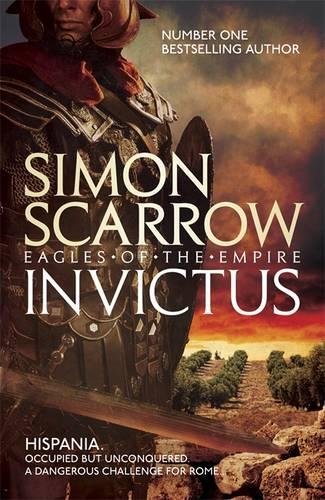
Book Review: Invictus

In Simon Scarrow's 15th novel of the Macro and Cato series, Invictus takes us to Roman-held Spain. I really enjoyed yet another exciting adventure. Scarrow's ability to create great scenes so the reader knows where they are is again evident throughout Invictus. And as always, Scarrow makes it easy to understand both the protagonist and antaganoists' point of view. I was surprised by Cato's sudden vicious turn. Being the intellectual of the two main characters, his new attitude did make me pause. 

All in all, Invictus is a good quick read.

Tuesday, May 30, 2017

Book Review: All The Light We Cannot See

All the Light We Cannot SeeAll the Light We Cannot See by Anthony Doerr

My rating: 4 of 5 stars


I was very impressed with Anthony Doerr's use of language. His description of the atmosphere of France and Germany before and during WWII was exceedingly vivid.

Telling the story primarily through the experiences of a German teenage boy, Werner, and a blind French teenage girl, Marie-Laure made for intriguing reading.

What I liked most about the Werner story, were the decisions he made to act or not act in certain situations. I also enjoyed Werner's process of learning there was so much more to the world than life in his small dirty coal town - even though it was not all positive.

Marie-Laure's story had great descriptions as they were filled primarily with the sense of touch, smell and hearing. Her listening to the sounds of her town after the initial bombing from birds to mollusks to dead whales was wonderful.

Unlike, Werner's story, hers had different perspectives from secondary characters like her father, uncle and von Rumpel. While this did not hurt the story, it made for a different reading in her chapters compared to Werner's.

There were time jumps every other chapter. Meaning the first chapter was 1944 while the second chapter was 1934 and the two stories ran forward from these two time points. I believe this was done to get some action into the beginning of the book, because while the 1934 years were mildly interesting, there was no sense of danger. It was a good choice.

Zach Appelman's reading on the Audiobook was superb.


View all my reviews

Monday, May 15, 2017

Book Review: Stranger in a Strange Land

Looking for a science fiction novel to take me away for awhile, I listened to the audio book of the classic Stranger in a Strange Land by Robert Heinlein.  I thought the book to be interesting, insightful, but a little slow at times.

https://www.amazon.com/Stranger-Strange-Land-Robert-Heinlein/dp/0786174307
from Amazon.com
The premise of the story is of a human, Michael, born on Mars and left to be raised by aliens. He then returns to earth 25 years later and has to learn what it means to be human.

Heinlein did an excellent job delving into that question. He discusses government, religion, and the free love of the 60's.

Michael's perspectives, insights, and questions into all these human interactions and institutions is fascinating. While I found the writing very engaging, there were times either Michael's or one of the other main character's thoughts about a current situation or what being human meant dragged on.

I always find it interesting to read science fiction books written over 50 years ago to see how readers and writers of that time saw the future. For example, 50 years ago stories could still be written about alien civilizations roaming across Mars and still be believable. Today, authors have to use wormholes, alternate galaxies, and far off undiscovered planets to populate their novels with "believable" aliens.

Perhaps even more interesting to me, is how people envision earth's governments and society changing or not changing in the future. Spoiler: women in Heinlein's future are treated the same as women in the 60's when the book was published.

Overall I enjoyed the book, especially the good narration by Christopher Hurt on the audio book that helped me get through the slow parts.


Sunday, May 7, 2017

Series Review: Temeraire Series

Naomi Novik's 9-book series following the black dragon Temeraire and her British captain, William Laurence around the world fighting the Napoleonic Wars was a wonderful treat.

There is great chemistry between the characters especially Temeraire and Laurence.

The battle scenes are done extremely well with Novik tying all of the major Napoleonic battles in Europe in with the dragons but without detracting from the nature, hardship and outcomes of the battles.

The novels take the readers around the world at a time when most Western history books focus on Europe. Novik takes the reader from Australia to South America to Asia to Africa following regime changes and uprisings.

Novik also skillfully addresses social and moral issues from race to slavery to class to a highly intelligent species that had no rights under the law of man.

If you are looking for a series to take you away this summer, I highly recommend this one.


Throne of Jade (2006)


Black Powder War (2006)


Empire of Ivory (2007)


Victory of Eagles (2008)


Tongues of Serpents (2010)


Crucible of Gold (2012)


Blood of Tyrants (2013)


League of Dragons (2016)

Sunday, April 30, 2017

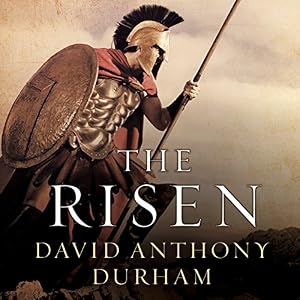
Book Review: The Risen

I enjoyed David Anthony Durham's telling of Spartacus' story from the perspective of multiple auxiliary characters from different tribes, Romans and slaves.

The Risen helped me understand the impressiveness of Spartacus' rebellion. Not only did he keep a winning army together for years in a hospitable land, it was an army of unprofessional solders where larger majorities couldn't communicate with each other as they couldn't speak each other's language.

I also liked that the novel started on the night of the breakout rather than on Spartacus' life prior to his capture and time as a gladiator. It really got the novel off to a fast start.

Steven Crossley gave a superb reading, breathing life into Durham's multitude of characters.

While there were many fully described battle scenes, I was a little disappointed that some battles were only talked about after they had happened.

Overall, I really enjoyed The Risen.


Saturday, August 22, 2015

Book Review: The Golem and the Jinni

The Golem and the Jinni by Helene Wecker is a fascinating story of Syrian and Jewish myths and cultures at the turn of the 20th century.

I admired Wecker's ability to draw a connection between the Jinni and Golem's cuffs and how humans are cuffed by religion, culture and money.

I enjoyed her descriptions of the world her characters inhabited and how the Golem and Jinni viewed our strange human behaviors providing moments of levity and self-reflection.

Narrator George Guidall's steady pace and accent provided an air of authenticity to the audiobook.

I would highly recommend this novel.

Amazon link to The Golem and the Jinni


Sunday, March 22, 2015

Book Review: The Emerald Atlas


I really enjoyed The Emerald Atlas by John Stephens.

I had feared the novel might be similar to the Magic Tree House series or be written at a level that would not engage adults.

I am happy to say that my fears were unfounded.

While I feel the beginning of the novel started very cliche in the orphanages,once the children reach the lake at Cambridge Falls two or three chapters in, the story becomes very unique with many unexpected twists and many memorable characters. I even had a couple of laugh out loud moments while I listened to the audio book during my commute.

The audio book is a first class recording.

I look forward to listening to the next book in the series, The Fire Chronicle.

Amazon link to The Emerald Atlas

Tuesday, July 22, 2014

David and Goliath Review

The premise of David and Goliath by Malcolm Gladwell is how sometimes a perceived disadvantage can be an advantage and how what may seem to be the best, is not necessarily the best for everyone.

Some of the anecdotal stories were very interesting, especially the ones about David and Goliath, the impressionist painters in France, and picking colleges.

Some stories did a wonderful job strengthening his premise, others a bit more weakly.

David and Goliath left me thinking about my own children, their classroom settings, and which college they should attend in a different light.

David and Goliath is a worthy read.


Monday, July 2, 2012

Book Review: The Rising Tide

The Rising Tide by Jeff Shaara is the account of the war in North Africa and Sicily. The novel is told through the multiple perspectives of people who were there, including a tank gunner, a paratrooper, Eisenhower, Patton, and Rommel. Balancing these perspectives is a fair amount of narrative about the events happening surrounding these individuals, so the reader always has a good understanding of the larger picture.

This is one of the reasons why I like historical fiction: you learn something about history while you as a reader, experience it through the characters' eyes. The shock, then fear of the tank gunner who scores a direct hit on the turret of a massive German Tiger tank, that just keeps coming, and his subsequent race to escape. Afterwards, Shaara provides the reader with a narrative about the fullscope of the disaster at Kasserine Pass. This balance is what makes the story so engaging. Listening to the audiobook, my son would always say, "yes!" whenever we switched into the paratrooper or tank gunner's perspective, and lamented when we switched to Eisenhower's perspective or long bit of narrative, while I found all parts equally intriguing.

However, I found that this novel and Shaara's sequel, The Steel Wave, and even Pressfield's novel, Killing Rommel, only have Rommell's fictional view representing the German perspective of the battles and German command structure. In all three, Rommel constantly rails against the German high command, making them look inept. That may be true, but we don't read about anyone else's perspective to counterbalance or support his view. My son said he was voting for Rommel, because everyone was against him.

The Rising Tide and its reading by Paul Michael is a very engaging novel of the battle for North Africa and Sicily that I highly recommend.

Saturday, May 12, 2012

Book Review: Killing Rommel

Having a fascination with military history, I have always enjoyed WWII books and movies. Recently, I watched Patton and am currently listening to the audiobook, The Rising Tide by Jeff Shaara. What got me started on my current WWII kick was listening to the audiobook version of Steven Pressfield's Killing Rommel. Mr. Pressfield has us follow a british soldier who is a member of the Long Range Desert Group. This was a group who helped scout out the enemy formations in Africa and conduct raids behind enemy lines. This soldiers patrol's particular mission is, as the book's title suggest, to kill Rommel. As Mr. Pressfield has done in so many of his books, he is able to convey the daily hardship the lowly infantry man or shield carrier or Macedonian foot soldier must endure. In this case, surviving in the deserts of Africa. The images Pressfield created in my mind of the desert and what the men had to go through to reach their objectives I still remember a month after reading the book. The letters to his wife were the only parts that caused the book to drag in parts. Not necessarily the first one, but the multiple stops. It's interesting because in The Rising Tide, there are stops when other individuals talk about home and letters, but I didn't feel the same level of disruption. There was also one part in Killing Rommel that seemed quite unbelievable. Killing Rommel is a good book that I recommend to anyone interested in the North African campaigns of WWII.

Monday, March 19, 2012

Book Review: The Big Burn

I found the The Big Burn: Teddy Roosevelt and the Fire that Saved America by Timothy Egan to be a fascinating book about a defining moment in America.

It discussed the founding of the U.S. Forest Service, and how it became the institution it is today and how the fire changed it's original mission.

We follow Teddy Roosevelt and the first Chief of the United States Forest Service, Gifford Pinchot, and their fight to protect what was left of America's forest for future generations to enjoy against the railroad and timber barons and the hordes of settlers flowing into former Indian lands for scrupulous and unscrupulous purposes.

Egan's profiles not only of national figures, but also of settlers, timber barons, gold miners, black soldiers, and rangers really brought about a well-rounded story showing just how diverse a people were living in the American West at the turn of the century.

The first half of the book deals primarily with Roosevelt and Pinchot's relationship and the setting up of the U.S. Forest Service, but the second half really kept the pages turning with the first sparks of the big fire and the stories of heroism, bravery, and death. Egan's descriptions put me right on the hills with the men protecting the towns and each other.

I highly recommend this book for anyone interested in American history.

Tuesday, March 13, 2012

Book Review: The Faithful Spy

The Faithful Spy by Alex Berenson is a nice quick read for those who like spy novels.

What I especially enjoyed was the protagonist's time in Afghanistan and Berenson's ability to create a very high tension level. I found the character's mental state transitioning back from Afghan life to U.S. life also very well done.

The book had a well-developed bad guy with a good plan that kept the reader guessing until the end.

The secondary characters were fine, but didn't really move me one way or the other.

My main criticism is that when the protagonist was in the U.S., why wouldn't he just pick up the phone and call for help or call in a tip.

That being said, it is a decent read.

Monday, January 9, 2012

My Favorite Books of 2011

It's that time to list my favorite books of the previous year. Here we go:

1. Catching Fire (Part two of the Hunger Games trilogy.)
2. A Game of Thrones
3.A Clast of Kings
4. Storm of Swords
5. The Faithful Spy
6. The Peloponnesian War

Please read my reviews on the first four books.

Book Review: Under the Eagle

In 43 A.D., Rome launched it’s largest invasion of Britain consisting of roughly40,000 men. This is the setting of Simon Scarrow’s, Under The Eagle. Two legionnaires, a centurion and raw recruit, are our protagonists that will lead us into Britian.

I liked how Mr. Scarrow wove in his historical details without interrupting the flow of the novel. It lets the reader know that Mr. Scarrow knows his subject.

I also enjoyed the mystery that plays thoughout the novel. However, I think one of the reveals came too early. Also I think the ending could have been smoother. The resolution of the mystery and final action scene compete for the reader’s attention and suddenly the reader is unsure which event is the most important.

I enjoyed the novel and look forward to the second one, principally because I like the character of the centurion and have faith that Mr. Scarrow will be able to continue relaying the history of the invasion of Britain in an entertaining manner.

Friday, December 23, 2011

Book Review: The Last Lecture

Randy Pausch's The Last Lecture was at times insightful and at other times a long thank you letter to his wife and kids.

The first three-quarters of the book provided many interesting life anecdotes. Some of my favorites were: how influential the world of Disney was in his life, how he went about fulfilling many of his childhood dreams, and how his first football coach started his team's first practice without a football.

The last quarter of the book went on for too long about how great his wife and kids were. While commendable, I didn't feel it provided the reader with any information that would help him or her in their own life.

I was disappointed that the The Last Lecture did not contain a transcript or narration of Randy's lecture, thereby turning the book into a "behind the scenes" making of the last lecture.

In conclusion, I felt that while the book had much to offer at times, lacking the actual lecture left me dissatisfied.

Saturday, August 27, 2011

Book Review: A Game of Thrones (series)

I really enjoyed reading A Game of Thrones by George R. R. Martin. The book follows so many different characters, that at first it almost gets unwieldy, but Mr. Martin is able to keep it together. He does provide an appendix with a listing of the names and relationships of the royal houses. I might have used it if I had known it was there, but I was not lost without it. As in many multi-person point-of-view novels there are certain characters a reader can relate to better than the others, and this novel is no different. I will say that one of the character’s stories I liked least in this novel, became one of the more intriguing stories in the second book.

I praise Martin on his attention to detail to the world he created. The tools, weapons, homes, clothing, food and other items appear to be based on technology from the middle ages. Everything is very functional, machines and weapons make sense, no item are hard to understand. Also the elements of magic and fantasy are very subtle at first, helping keep the novel grounded in reality. Only slowly does mystical elements insert themselves into the story. However, the story never takes on (so far) a fantasy novel flair.

I enjoy maps in books, but found that I had to frequently use the map in this book as the characters are always moving or talking about some other city or place where something happened or was happening. I'm on the fourth book and still have to refer to the maps to figure out where the characters are.

A Clash of Kings and Storm of Swords maintain the same level of detail, creativity and excitement as the first. However, the fourth book, A Feast of Crows disappointed me because only one of my favorite characters was in it and even then she went down an uninteresting path in this book. The rest of my favorite characters were completely absent from this novel. Martin says at the end of Feast of Crows that all of the other characters' concurrent stories will be told in the next book. To read a 1000 page novel without my favorite characters, then read another 1000 pages before I get back to the characters I just read about, is something I'm not happy about.

The books are really good reads, but they are very long.

Book Review: Last Flag Down: The Epic Journey of the Last Confederate Warship

Last Flag Down by John Baldwin and Ron Powers tells the story of the Confederate warship CSS Shenandoah and her executive officer Conway Whittle. At times I found it very interesting, especially during the final months of Shenandoah's voyage and when the authors provided information about major Civil War events that were occurring back on the mainland while they were at sea. However, middle parts of the novel dragged as the men navigated long stretches of sea where nothing happened. Even the protagonist Whittle would often say how uneventful the days could be.

Wednesday, July 20, 2011

Book Review: The PIllars Of The Earth


I chose to read a novel by Ken Follet based solely on his reputation for writing critically acclaimed novels. I chose The Pillars Of The Earth because it is a historical novel about a period that I knew little about, 12th century England, and a subject I even knew less about, cathedral building and how English life centered around it.

This is not a fast-paced novel. It is 943 pages rich in details and language that takes you on a journey through a time where might was right, religion played an enormous part in everyone’s lives for good and bad, and showed a modern reader how tenuous one’s hold on life could be during that time.

My favorite chapter was the prologue. I had not read a chapter written in an entirely omnipresent point of view in a long time, and even longer for one done well. I actually read it twice, and even read it again to my son to show him how using details effectively can truly paint pictures in someone’s mind. Here is the opening line and first paragraph:

The small boys came early to the hanging.

It was still dark when the first three or four of them sidled out of the hovels, quiet as cats in their felt boots. A thin layer of fresh snow covered the little town like a new coat of paint, and theirs were the first footprints to blemish its perfect surface. They picked their way through the huddled wooden huts and along the streets of frozen mud to the silent marketplace, where the gallows stood waiting.


While I praise Follet’s writing for his use of details and language, be forewarned these details are used in every aspect of the book, whether it’s the building of the church, character descriptions, sex, murder, and rape.

While the first chapter is written in omnipresent, the rest is written in third person with alternating perspectives.

I enjoyed The Pillars Of The Earth, but it is very long and at times felt like it.